
BLOG
Designing a hydrofoil for 3D printing
How do make a 3D printed hydrofoil withstand the stress of kitesurfing
3D printing technology is becoming ever more accessible, it is a fantastic tool that allow us to bring ideas to life. With printers than can be easily setup in an office, you no longer need to go to a specialist company for your prototypes, and this is only going to get easier, with more reliable technology and materials.
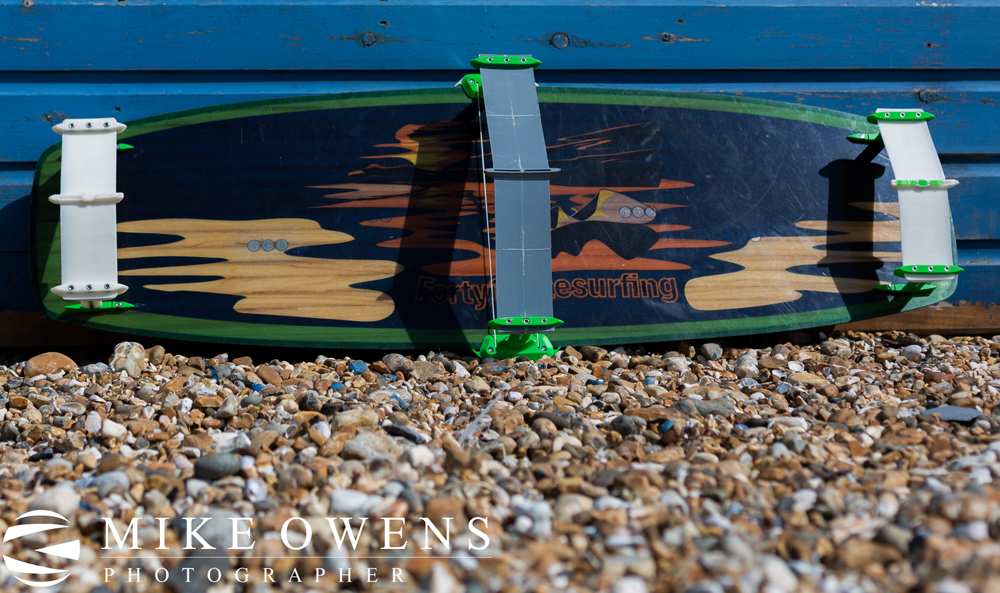
Conventional hydrofoils use carbon fibre cloth to ensure the product is stiff enough. Carbon Fibre is a fantastic light and stiff material, however it is very time consuming to make products this way. I want to make mine out of more conventional materials, allowing me greater flexibility for manufacturing and material choice. If I can make my design strong enough with 3D printed parts, then it will be strong enough when it is moulded. There are some key points to consider even when 3D printing, one of the main ones is the print orientation, as the part is more likely to split between print layers.
Plus, due to print size limitations, larger parts need to be printed in sections and fused together. Consideration needs to be given as to how best to interlock these to avoid creating weak points.

So, how do I make this possible? Firstly, by supporting our hydrofoil at either end, we can reduce the stress and displacement seen on the foil, effectively we are creating a bridge, albeit an upside down one.

The 'mast' sections are quite key, as they are long levers on each side and because we want to keep them narrow, we use steel inserts for strength. When we go to production, we will use high grade stainless steel, but for the prototypes, with cost and lead time being a factor, we can make use with just steel and give them a good rinse after a session to limit the amount of corrosion meanwhile.

It is important to consider where the load reacts in the part. By carefully observing how a component deflects in Finite Element Analysis, I can see what areas would benefit from extra support and distribute the load into other components, as well as considering how to avoid twisting and identifying any necking on key components.
Finally, never underestimate a good rounded corner! Avoiding sharp edges is important to avoid high stress concentrations in these areas. Ever wonder why the aeroplane windows are so curved?

It's absolutely fantastic to be able to design, print and then take the design out on the water for live testing!
James Crook
Founder and Managing Director Forty1 Kitesurfing

What makes our hydrofoil so special?
What makes our hydrofoil so different from existing designs? By designing ours specifically for the shallow water conditions and making it so it retrofits to your existing kiteboard, we are able to offer something truly unique and innovative.
It has been a whirlwind start to the year, as we focus on investment and moving forward as a business, including pitching at Venturefest and making use of other networking opportunities such as Knowledge Transfer Network events, we want to take time to talk about what is it that makes our hydrofoil design so special?

Kitesurfers often feel the frustration of arriving at a shallow water location with the wind too light for them to ride in. What if there were a solution that allows them to ride these conditions, making best available use of their time?

Existing designs cost in excess of £1000, including the cost of a bespoke board, need to be ridden in deep water due to the depth of the mast and can only be ridden in one direction. The latter 2 points makes for a steeper learning curve.
By designing our hydrofoil out of standard materials, ours target price is significantly less, it is 1/10th the size which makes it more portable and can be ridden in shallower waters. It is easier to ride as it can be used in both directions, making it a more similar experience the traditional kiteboard, plus less kit is needed as it retrofits to your kiteboard!


For the future? We can expand our range to cater for all abilities, optimising the cross sectional area for advanced riders, allowing for more advanced tricks, to make it easier for beginners to learn and to allow kitesurfing schools to teach in a wider range of conditions.
We are keen to work with the local universities, building on their expertise and research in maritime and materials, with a focus on sustainable options, already being awarded a mini grant to help the journey along.
The market opportunity is huge. In the UK there are over 8000 kitesurfers, with over 200 active instructors and over 1.5 million kitesurfers worldwide, that is a lot of people we can make happy. Plus there is the extra potential of bringing more people to the sport by making it more accessible!

And of course, world ambitions aside(!), it is absolutely important to build on the local skills and heritage around the fantastic Solent region.

Our hydrofoil has a real potential to be disruptive. We can reduce the amount of kites you need in your quiver and the need for multiple boards, with our more cost effective solution and it does not even need to compete with the existing hydrofoil designs, you can own both!
Want to join the journey? Please get in touch!
-
James Crook - Founder and Managaing Director - Forty1 Kitesurfing

Creating the Hydrofoil Dream
Always been curious and enjoy creating from a young age, this is the story of how I've come about to develop a hydrofoil concept for the twin tip kiteboard.
Thanks to Planet Kitesurf Holidays for post this blog on their website!
A low profile low cost hydrofoil for kitesurfers to attach to twin tip kiteboards.
I've always been curious about how things work and creating things has always been a passion since my first lego kit I was given as a child, even though back then I needed my dad's help to make it. I've always liked to explore my creative side but more often my curiosity brought the technical side to the fore, the end result was 13 years as a Mechanical Engineer.
I always felt myself fortunate in my job, there was a lot of freedom to explore different avenues, I would never be pigeon holed into one particular area. This gave me a range of skills, from design through to the analytical. When my company moved the operations to the US and leaving myself redundant, I was left asking: How can I best make use of these skills to do something for myself? I wasn't quite ready to go straight back into corporate life and I had a unique opportunity to find my own path.
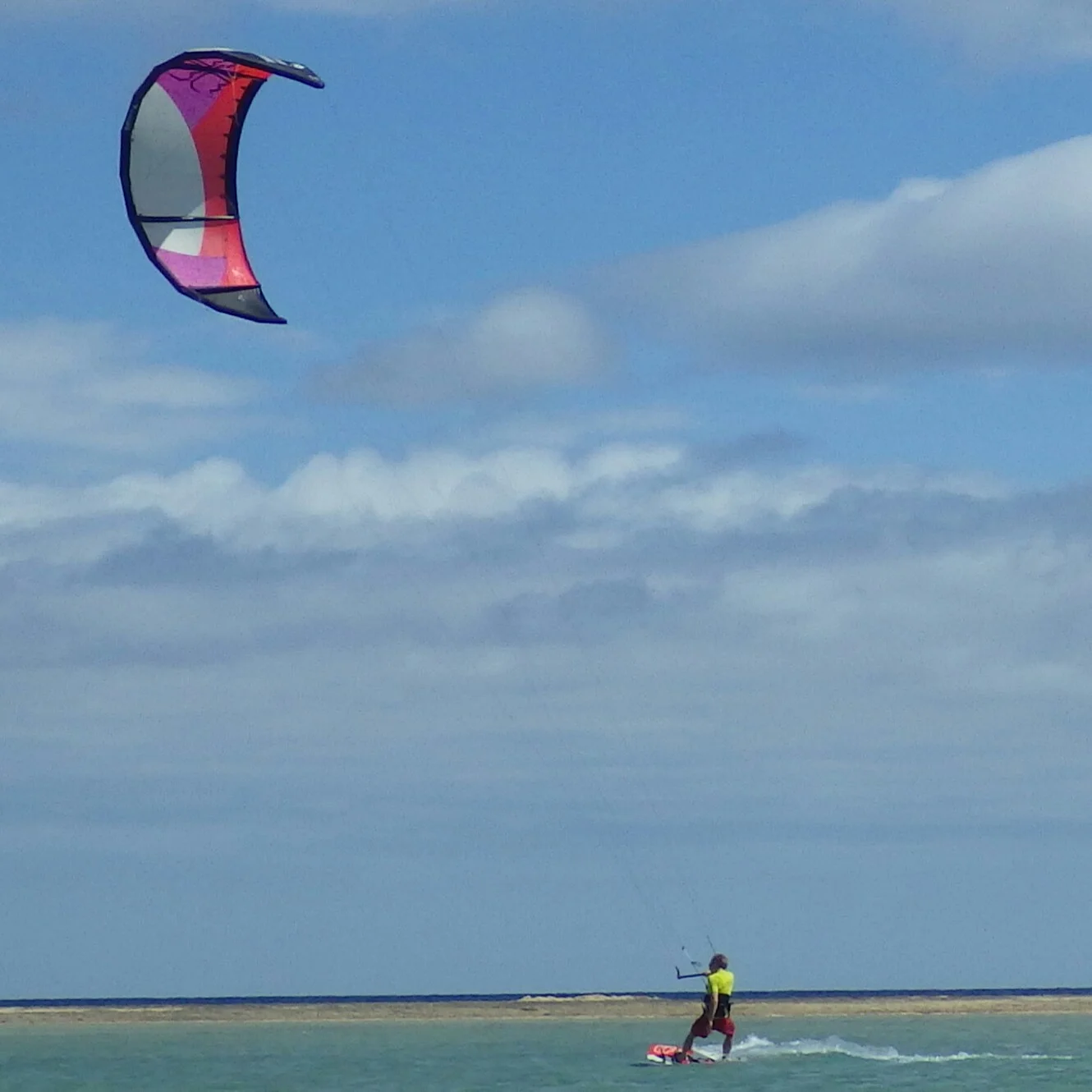
It was a discussion with the local shop that sparked my interest in the hydrofoil design, when the shop owner mentioned about the hydrofoil market and how it was growing. This gives me the perfect outlet. I've been kitesurfing for 5 years and love it, to work in this field would be a fantastic opportunity. A lot of products and innovation these days require electronics and software, and apart from the odd html knowledge, I can change the font and insert a paragraph, these aren't skills I possess. Neither, I should add, is actually manually creating things. I know what I want to achieve but the signal going from my brain to my hands seems to get rather distorted. With modern day computing and the latest 3d printer technologies, I can overcome these limitations!

I've found it exciting to see how the project evolves and the interest in generates. How will the project look on final completion? Certainly it is not what I thought it would look like when I started, when I first discovered that you can put a carbon fibre skin on a 3D print and the material cost was relatively low. That the process took a couple of days and that carbon fibre wasn't the friendliest of materials to work with quickly put me off that design. I did look at the more conventional carbon fibre process, in theory it is quite simple. Create the part, okay. Create the mould, sounds simple enough. Get some prepreg material, okay again. Get an oven, vacuum bag and compressor, now this is starting to turn into a production line and not something I'm quite prepared, or my girlfriend is prepared to allow me, to turn my conservatory in to!
And what of the analysis? I can run simulations to calculate the lift and the stresses the foil will go under during ideal conditions, but the foil will almost never be under these conditions, as the water gets choppy and the riders undoubtedly puts the board at various angles never imagined, not to mention the heights they can float (fall?) from. A phrase I often find myself using after designing something, “why on earth would you use it like that?” Though I'm probably thankfully for humankind that not everyone's brain is wired the same as mine!


With each iteration of the design, I can see it evolving, I can see challenges and I can see how to overcome them for the next design and I apply for design protection on each one. I sometimes wish the next design would be the final one, but when it is not, I reflect and think that when I do get to a working solution, which I will, then it it just makes it that little bit more satisfactory to look back on the journey I took, and I love to see the interest people take in it.
I love sharing my story and I really enjoy people taking an interest and being involved, so if you have read this and find yourself intrigued, please look me up.
James Crook
Founder and Managing Director of Forty1 Kitesurfing
Clothing Designs
Sustainable clothing with designs reflecting our love for our sport and the sea.
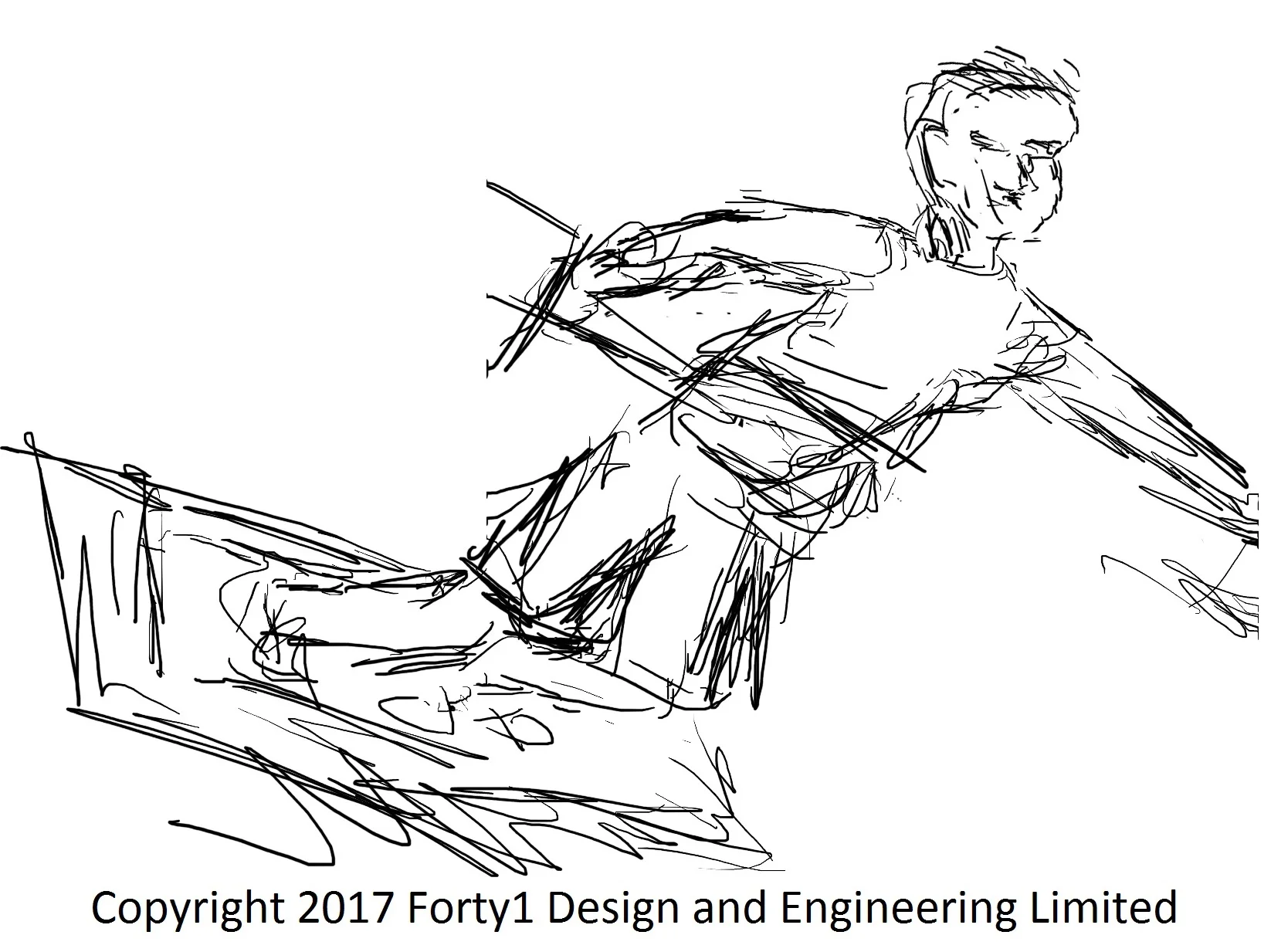
Do you like our clothing designs? Is there anything more you would like to see? Would you like colours adjusted for your liking? Just let us know. We start by selecting our favourite pictures we've taken over the years, sketching it out, then turning that into vector graphics to be printed out via the Teemill service offered by Rapanui
We're trying out different styles and really finding out what people like and like to show how we feel connected to the sea through our designs.